woom GO 1 Review – The Best Small Balance Bike
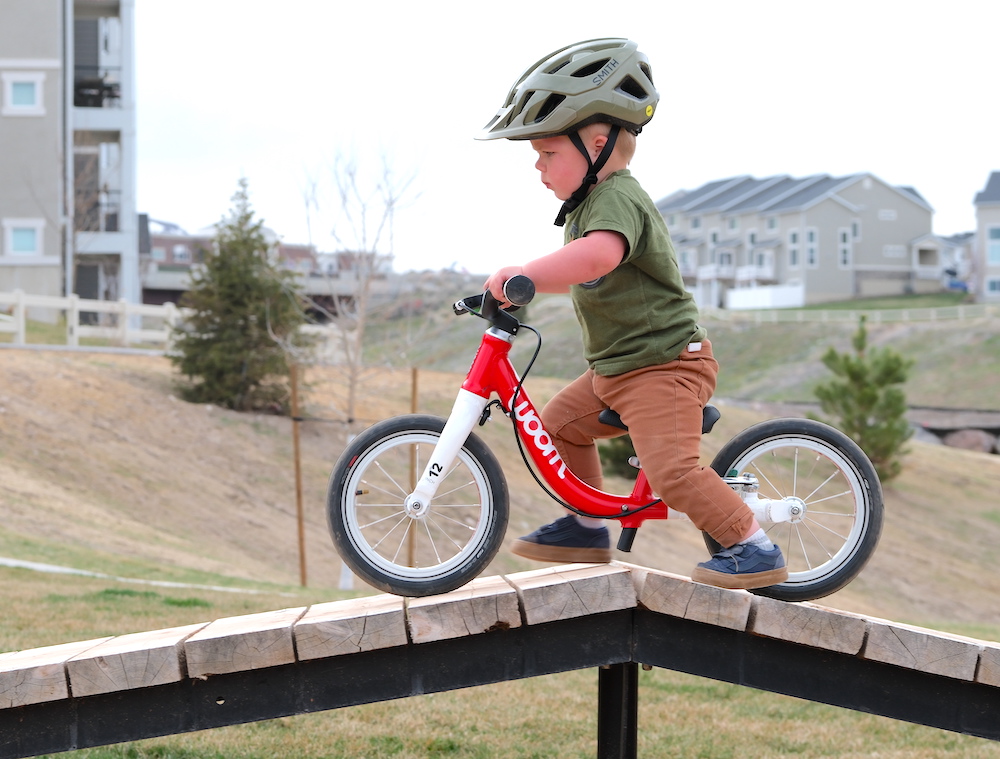
The beloved woom 1 has been thoughtfully updated and renamed the woom GO 1—and with those updates, it firmly holds its place as the gold standard of balance bikes for young toddlers. Lightweight and incredibly well-designed, every component of the woom GO 1 is tailored specifically for the tiniest riders. From its narrow-diameter ergonomic grips to its toddler-specific saddle with built-in carrying handle, this bike was clearly made with little learners in mind.
Designed to fit riders still wearing 18-month pants, the GO 1 is also one of the smallest balance bikes on the market—allowing toddlers to start their biking journey earlier than you might think possible! That said, preschoolers often size out of the GO 1 quickly, so be sure to check our sizing guide below before purchasing.
In this review, we’ll walk you through everything you need to know about the woom GO 1. We’ve tested every version of the woom 1 over the years, and while colors and small features have changed, the bike’s geometry and fit have remained consistent.
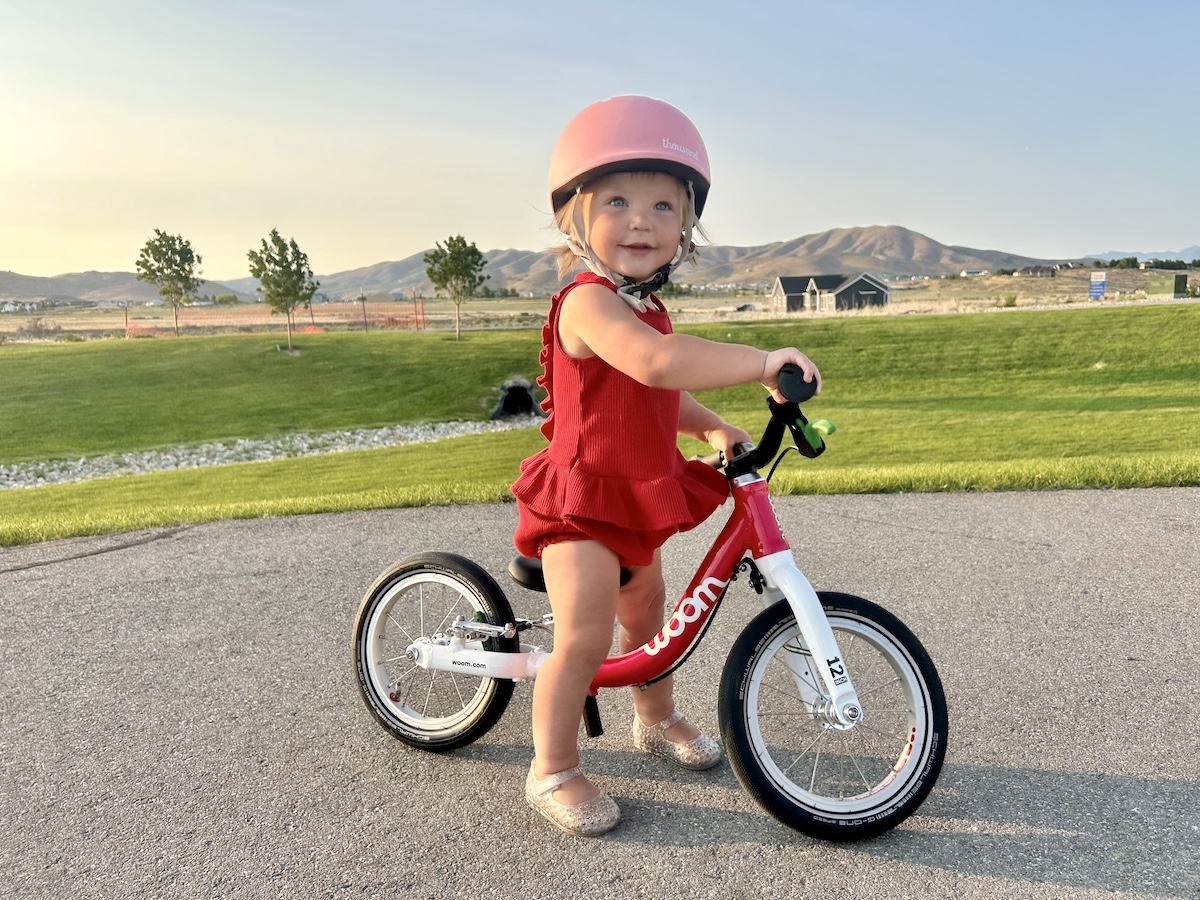
woom GO 1
MSRP: $249
BEST FOR: Young toddlers in 18-month to 3T clothing, riding on smooth, paved surfaces
SEAT HEIGHT: 10.75″ to 14.5″
WEIGHT: 6.3 lb.
ADDITIONAL SPECIFICATIONS
BRAKES: Hand Brake
TIRES: Air
FRAME: Aluminum Alloy
Cons:
woom GO 1 Review – Our Favorite Balance Bike for Tiny Riders
As balance bikes have grown in popularity (which we’re absolutely thrilled about!), so has the number of options on the market. From $50 budget buys to $300 mountain bike-style balance bikes, there are plenty of great options—and just as many not-so-great ones.
Having tested over 100 balance bikes over the years (including publishing the very first US review of the original woom 1 back in 2015), I can confidently say the woom GO 1 is the best balance bike for the smallest riders.
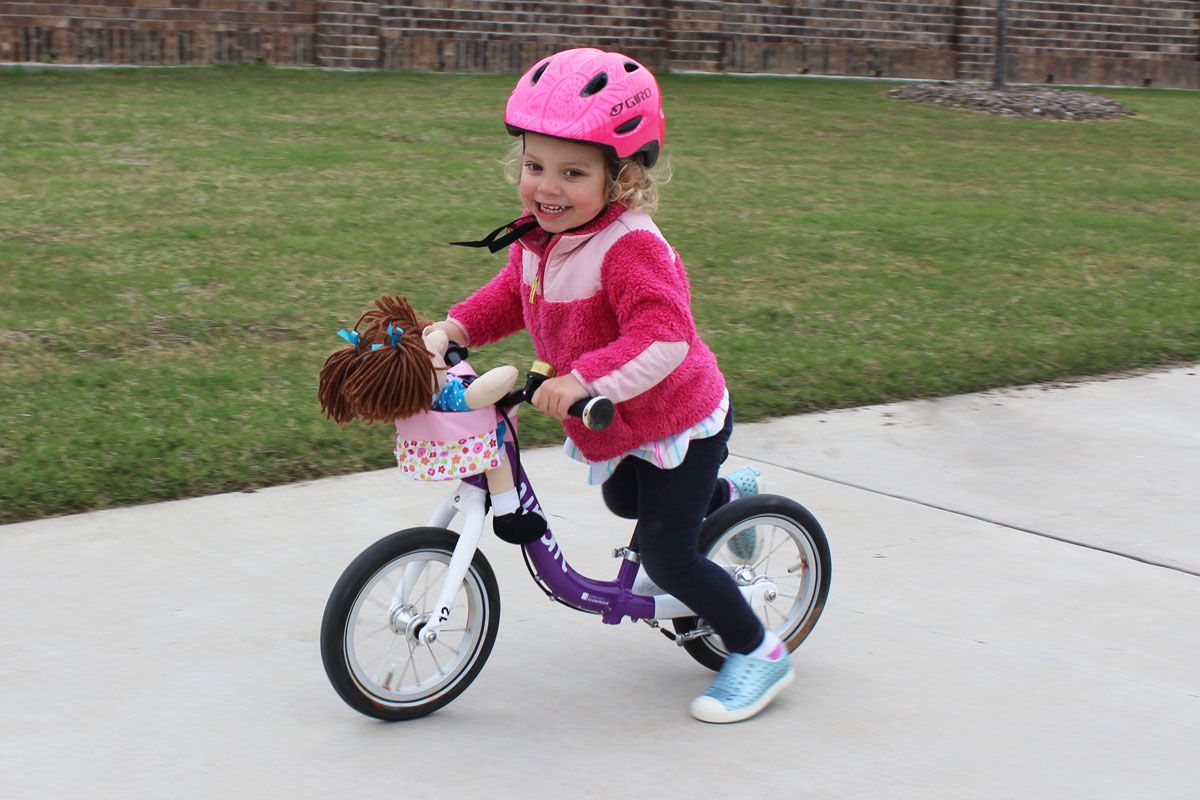
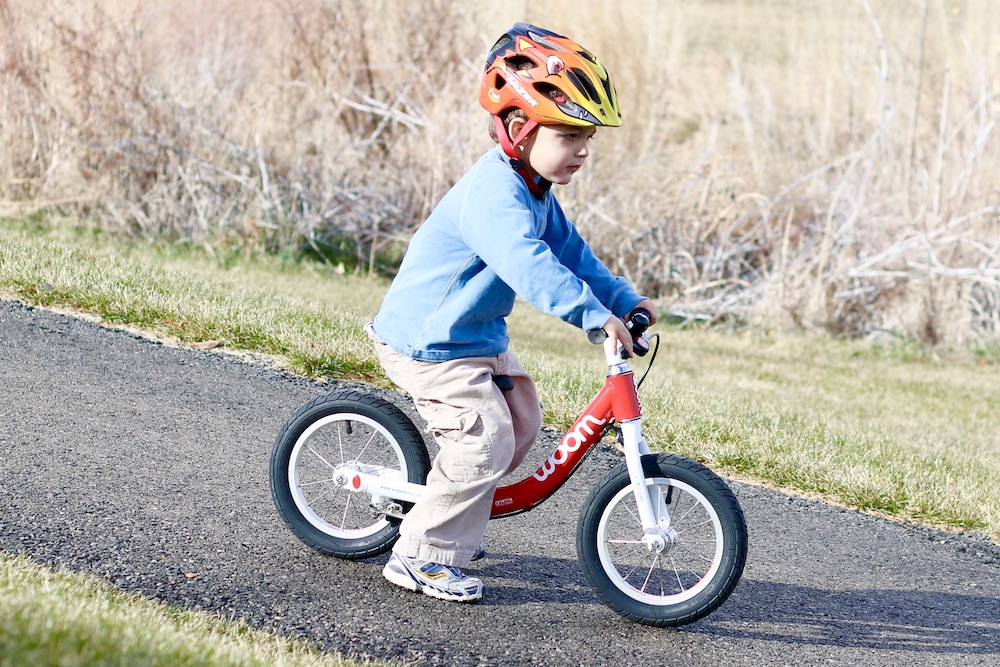
From its handlebar grips to its tires, every detail of the woom GO 1 has been designed with the unique needs of young toddlers in mind. True to its thoughtful design, it loyally follows a child’s lead—up hills, down ramps, and around obstacles.
Unlike other bikes we’ve tested, our little riders rarely look down at the woom 1 while riding—as if they forget it’s even there. They simply hop on and enjoy the ride. It’s so easy to balance and maintain momentum that many testers lift their feet and glide effortlessly the moment they get the chance.
In this review, we’ll break down what makes the woom GO 1 stand out and why it still reigns supreme. But first, let’s answer some commonly asked questions.
What Is a Balance Bike?
A true balance bike is a two-wheeled bike that looks like a small pedal bike—with one major difference: no pedals! Instead of relying on training wheels, kids use their feet to push, glide, and eventually learn how to balance completely on their own. This simple design helps children master the hardest part of riding—balance—before adding the complexity of pedals.
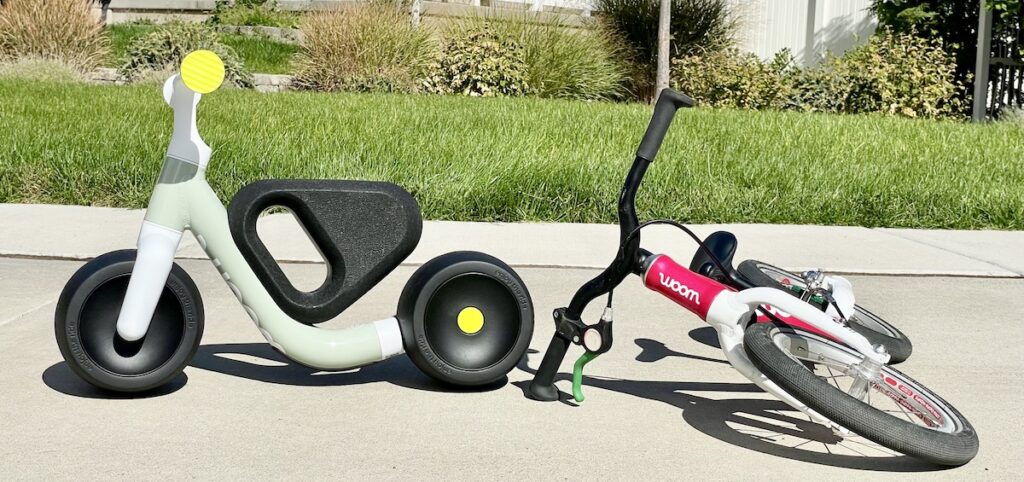
If a bike can stand upright on its own without any help, it’s not really a balance bike. Many 3- and 4-wheeled “toddler bikes” are marketed as balance bikes, but they don’t actually teach the core skill of balancing. Instead, they encourage kids to sit and push, which doesn’t translate to real bike riding—just like training wheels can delay the learning process.
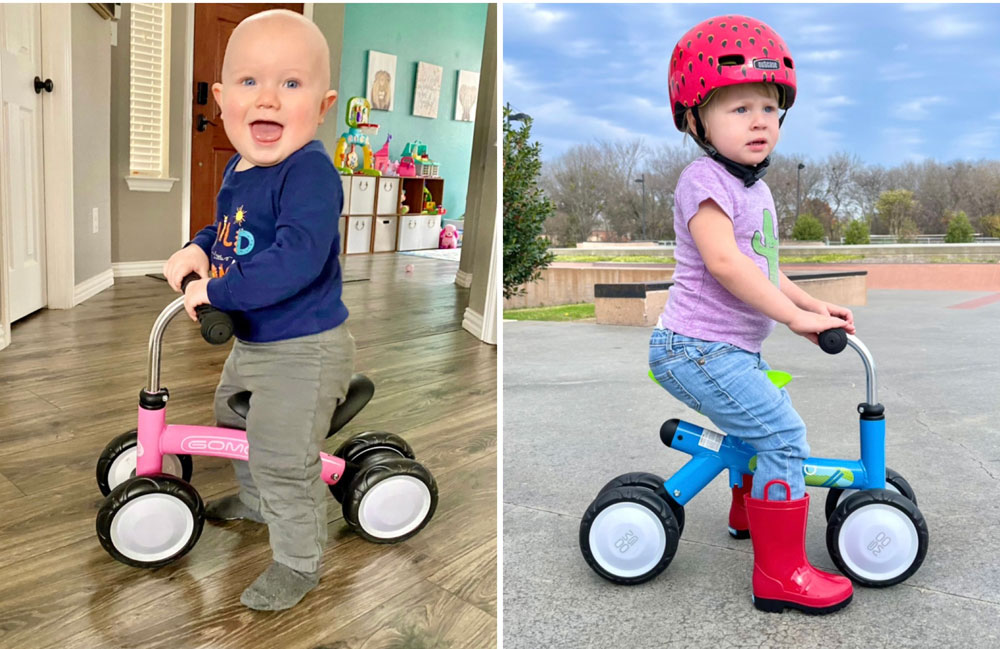
If your goal is to help your child truly learn to ride on two wheels (and we highly recommend it—it’s one of the best milestones to watch!), a true balance bike like the woom GO 1 is the way to go.
For younger toddlers who aren’t yet ready for a full two-wheeler, woom also makes the woom WOW, a self-balancing baby bike that helps little ones as young as 9 months build strength, coordination, and confidence before moving up to the GO 1.
Is My Child Ready for a Balance Bike?
While some toddlers may be tall enough for a balance bike before 18 months, most aren’t developmentally ready until at least 18 months old. Younger toddlers often don’t yet have the strength or coordination to support and steer a bike on their own. We’ve had testers as young as 16 months who fit the woom GO 1 but couldn’t yet manage walking with it independently.
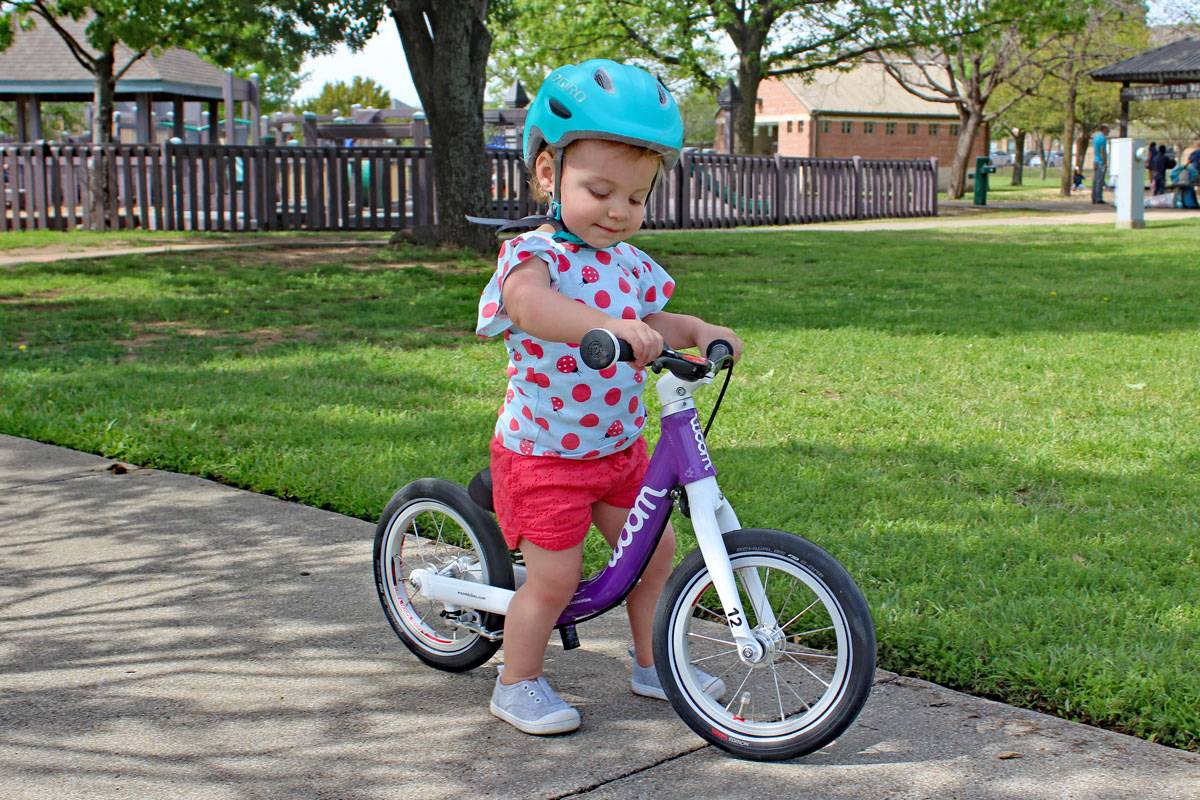
If your child is close to being ready, we recommend starting with a true balance bike and giving them gentle assistance to walk with it. While a “toddler bike” may seem easier at first, most make the transition to a real balance bike more difficult. But once they get the hang of it? It’s 100% worth the wait.
What Size Child is the woom GO 1 Best For?
The woom GO 1 is one of the smallest 12” balance bikes available, with a seat height range of 10.75″ to 14.5″. It’s a great fit for kids wearing 18-month to 3T clothing, or with inseams ranging from about 11.5″ to 15.5″.

If your child is already in 2T pants, you may want to consider a slightly larger balance bike to allow more room for growth. The Guardian Balance Bike, for example, has a maximum seat height of 16″ compared to the woom GO 1’s 14.5”. However, its minimum seat height of 12.5” was too tall for our 18-month-old tester in 18-month clothes. He fit comfortably on the woom, which starts at just 10.75” (or around 11.5” inseam).

Our young tester was able to sit flat-footed on the woom GO 1 but couldn’t fully touch the ground on the Guardian. The woom’s lower handlebars also made steering easier for his smaller frame, giving him more control and confidence while riding.
How do I teach my child to ride the woom 1?
You don’t have to! The beauty of a balance bike is that most kids teach themselves. They’ll naturally straddle the bike, begin walking it forward, and eventually figure out how to sit and glide.
Some kids pick it up right away; others take more time. The key is to offer plenty of opportunities to practice, even if it’s just for a couple of minutes at a time. Over time, those little sessions add up to big gains.
What does this process look like? Check out this video showing a toddler’s progression from cautious steps at 18 months to running by age 2. Spanning just 10 months, it’s a great visual example of how naturally kids learn to ride on a balance bike.
woom GO 1 Components – What Makes It Stand Out
How can something so simple be that much better than the rest?
At first glance, balance bikes seem basic: two wheels, a seat, handlebars, maybe a brake. What more could there be? If you’re looking for a toy, not much. But if you’re looking for a bike—one that actually teaches your child how to ride—there’s a lot more going on than meets the eye.
From frame geometry to tires and grips, a truly great balance bike is far more than the sum of its parts. And that’s exactly where the woom GO 1 outshines the competition.
Geometry and a Natural Riding Position
If you’ve ever tried to sit through a movie or meeting in a chair that’s the wrong size, you know how uncomfortable—and even unstable—it can feel. A chair that’s too big doesn’t support you, and a chair that’s too small makes you feel like you might fall over.
The same principle applies to balance bikes. Fit and proportions matter—especially for toddlers, whose small bodies and developing motor skills require a frame that’s precisely tuned to their size.
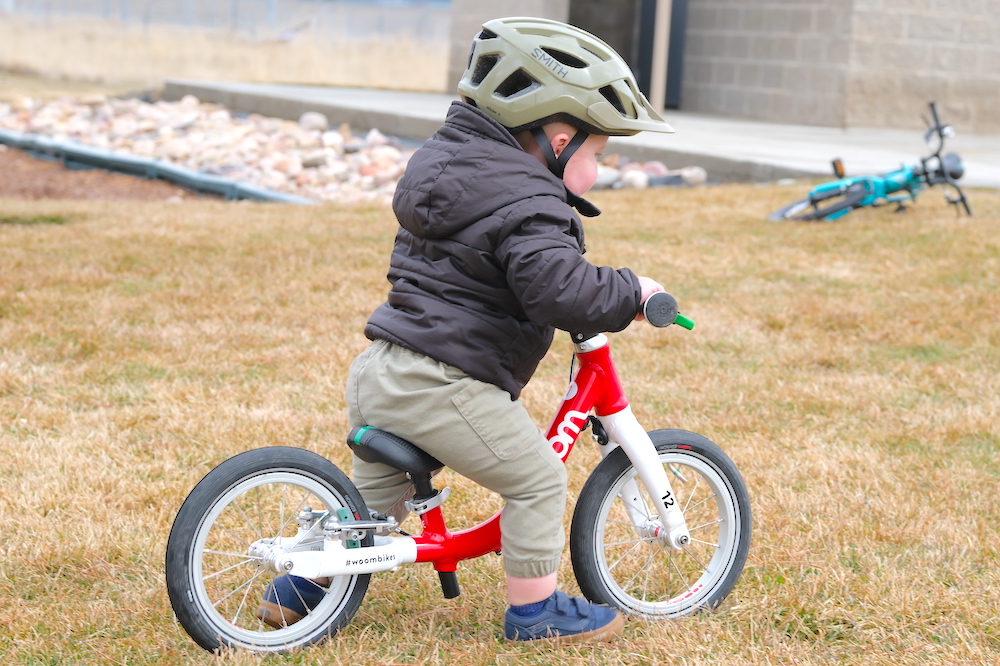
That’s where the woom GO 1 excels. It’s one of the few balance bikes on the market truly sized for the smallest riders. The frame isn’t too long or too short—it’s just right. And while many balance bikes technically offer a similar seat height, the woom’s overall geometry makes it a much better fit for shorter toddlers.
As a comparison, take a look at our young tester on the woom GO 1 vs. the Retrospec Cub Plus. While both bikes offer a similar seat height, the Retrospec’s taller frame and front end position his hands much higher—undermining his control by making it harder to lean forward and apply weight to the front wheel through the handlebars.
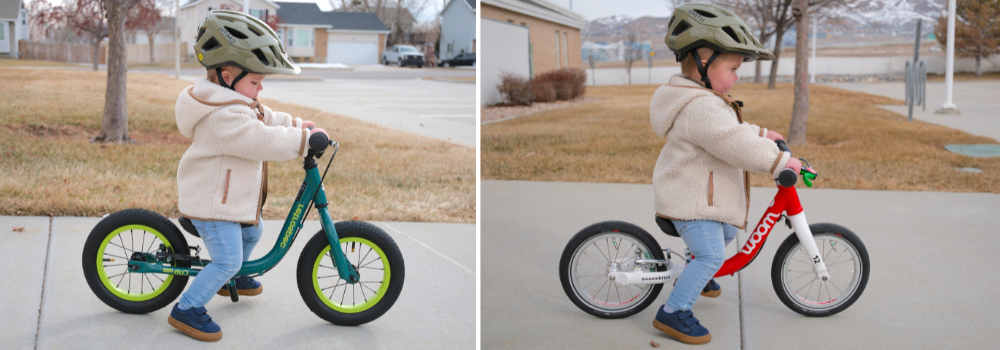
While the Retrospec does have a taller handlebar than the woom, as shown below, the overall front end of the bike is taller too. That extra height matters—especially for small riders who need to be able to steer with ease and confidence.
Lightweight and Nimble
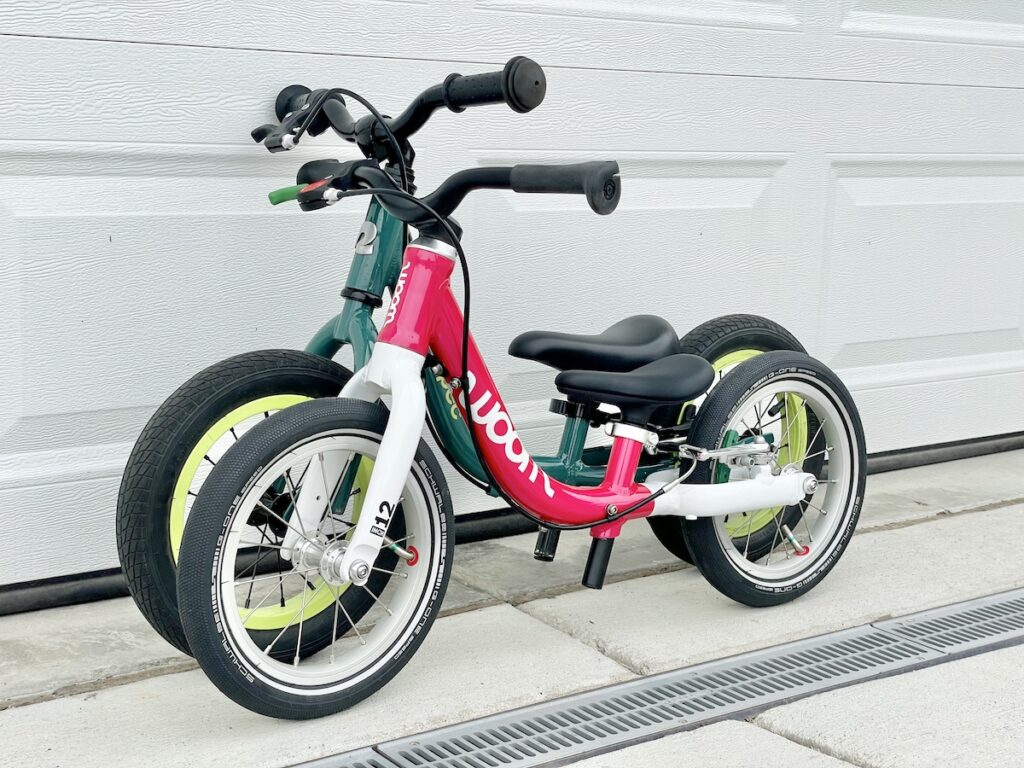
At just 6.3 lb, the woom GO 1 is one of the lightest balance bikes on the market—making it much easier for the smallest toddlers to maneuver and control. When kids are first learning to ride, they often pick up or reposition their bikes—whether to move the front wheel over a curb, lift it onto a rock, or simply explore. The lighter the bike, the easier it is for them to do all of that on their own.
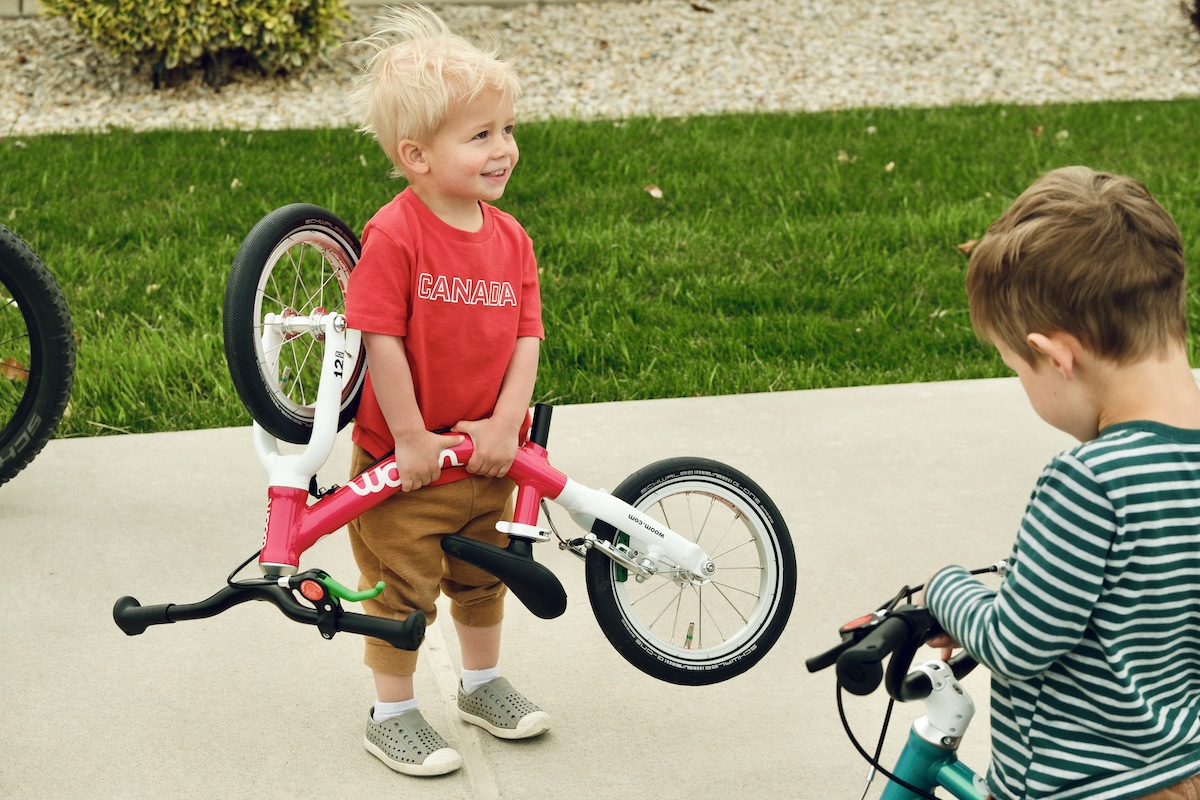
As they progress from walking to gliding, a lightweight frame also helps them steer more precisely through turns, navigate small obstacles, and gain confidence at pump tracks or parks.
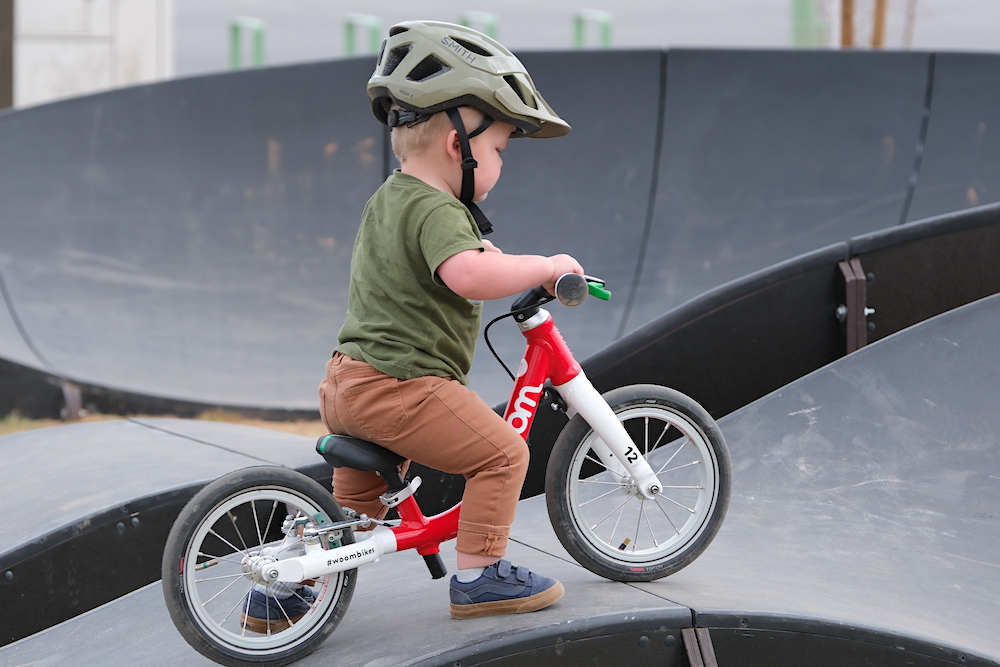
The woom’s lightweight is thanks to the bike’s 6061 aluminum frame and high-end, child-specific components that are designed to minimize weight without sacrificing durability.
As a comparison, the Retrospec Cub Plus weighs 8.7 lb.—more than 2 pounds heavier than the woom GO. That may not sound like much to an adult, but when the bike is nearly 20% of your child’s body weight, it makes a big difference in how easy and fun the ride feels.
Handlebars with Integrated Stem
Another key to the woom GO 1’s precise handling is its handlebar and integrated stem design. In addition to being properly sized and positioned for small riders, the woom GO 1 features a fully integrated 1” headset with sealed industrial bearings—tucked neatly beneath the silver cone below the black stem (you can’t see them even with the handlebar removed).
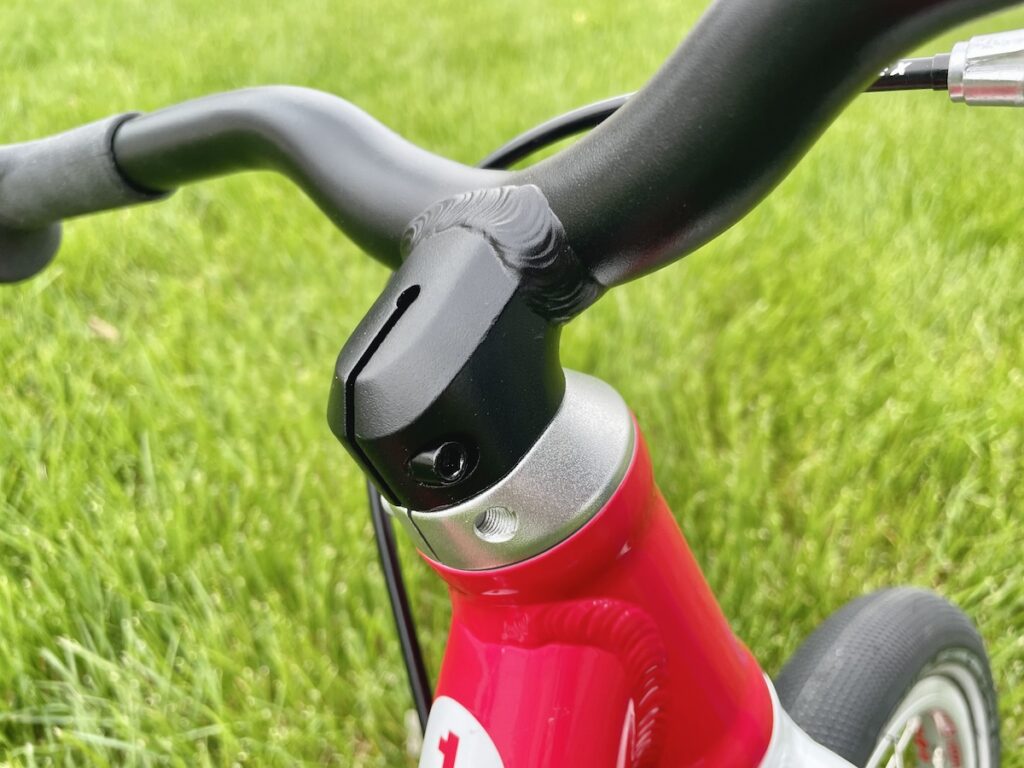
This high-quality headset is often overlooked—and nearly always skipped on budget bikes to cut costs. But it makes a big difference. Thanks to the smooth, sealed bearings, the woom GO’s handlebars rotate effortlessly, even with the lightest touch. That means toddlers don’t have to wrestle with stiff or jerky steering—they can focus on learning to ride with confidence and ease.
The rounded, low-profile stem (the smooth black cap where the handlebars connect) also helps reduce the risk of injury in the event of a crash. With no sharp edges or protruding bolts, it’s much safer for little riders who are still mastering their balance.
Ergonomic Grips for Tiny Hands
As one of the main contact points on any bike, handlebar grips play a bigger role than most people realize—and woom didn’t overlook a thing.
The grips on the woom GO 1 are specifically designed for toddlers, with a narrower 19mm diameter that’s better suited to small hands. Unlike standard grips, which can feel bulky or awkward, woom’s grips are both slimmer and more ergonomic, flaring slightly at the ends to match the natural curve of a child’s palm. This flared shape improves comfort and helps prevent hand fatigue on longer rides.
Compared to the grips on the Retrospec Cub Plus, you can easily see that woom GO 1’s grips are narrower ant more contoured to better fit tiny riders.
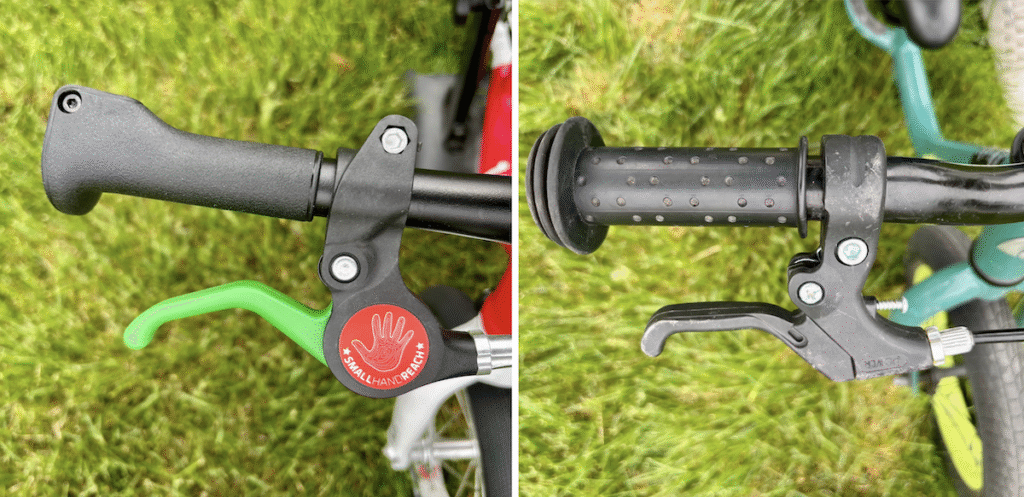
For added protection, the grips also feature integrated bumpers at the ends. These soft, rounded caps help shield little hands from scrapes during spills or tip-overs—something parents will appreciate when those inevitable tumbles happen.
Lastly, the grips are lock-on style and are securely fastened to the handlebars with an Allen bolt. This ensures they stay firmly in place and won’t twist or slide over time.
Single Rear Hand Brake
To help teach proper braking skills from day one, the woom GO 1 comes equipped with a single hand brake attached to the bikes rear wheel.
While toddlers between 18 months and 2.5 years usually don’t have the hand-eye coordination to fully use a brake, simply seeing the lever and experimenting with pulling it is a huge first step. It builds familiarity and confidence for when they are developmentally ready. In these early stages, most kids instinctively stop with their feet—so make sure they’re wearing closed-toe shoes!
By the time they’re around 2.5 to 3 years old, many kids develop the coordination needed to actually use the brake. That timing also lines up with when many toddlers start picking up speed and riding more aggressively, so having a working hand brake helps them stop faster, safer, and more smoothly—and also saves wear and tear on their shoes.
The woom GO 1’s brake system is specifically designed for small hands, with an short reach lever that’s easy to activate. The green-colored lever and brake pad provide helpful visual cues to teach kids how it works.
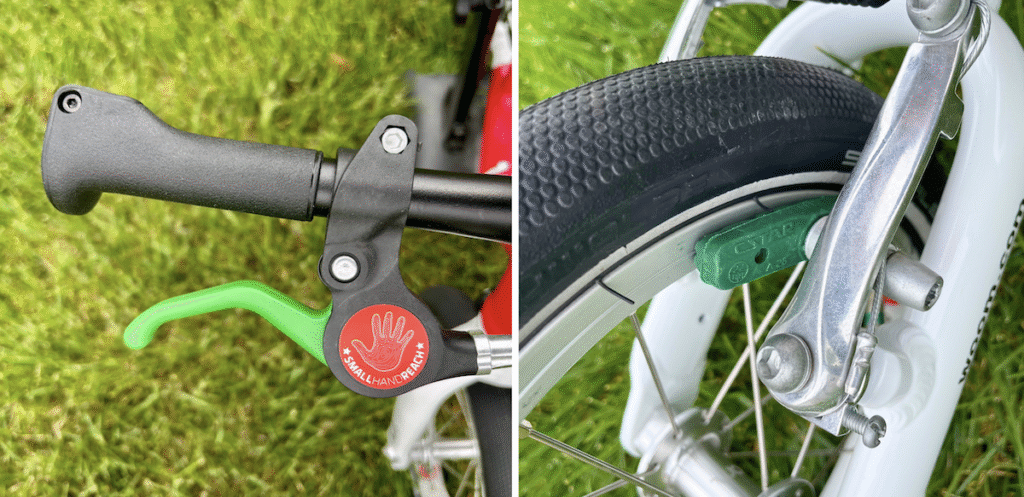
When your child is ready (typically around 2.5 to 3 years old), introduce the brake off the bike: have them squeeze the green lever while watching the matching green brake pad press against the rim. This simple activity can go a long way in helping them understand how the brake slows the bike.journey, but it’s best to buy a balance bike with a handbrake so it’s there when they finally do need it.
Saddle and Seat Post
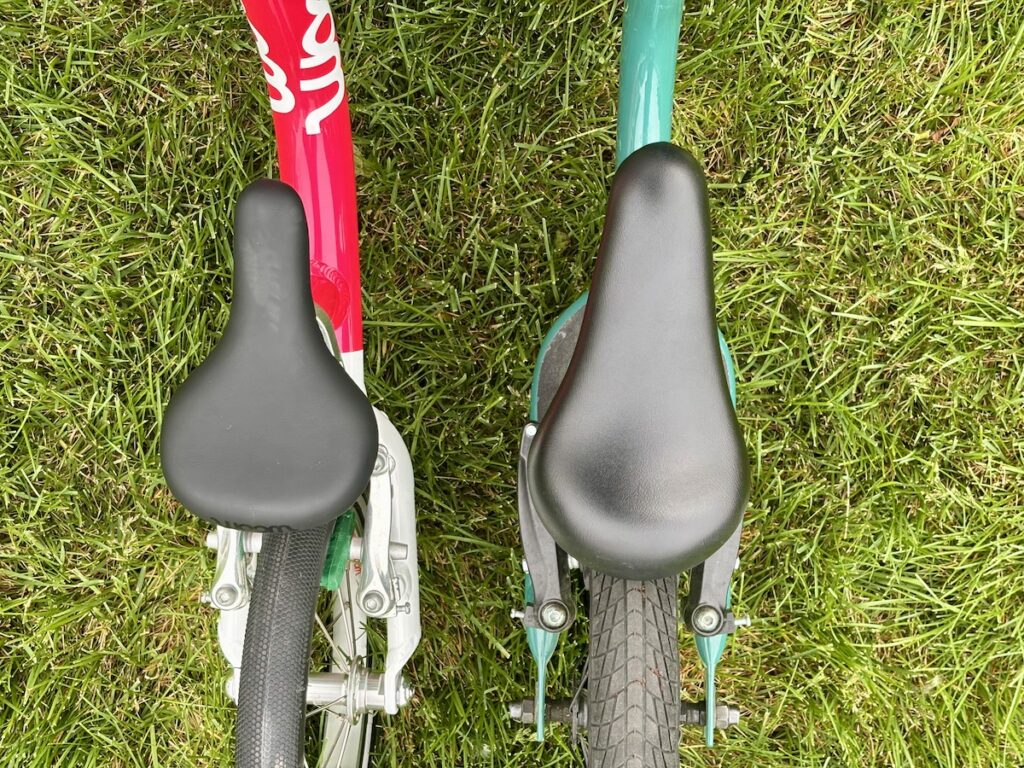
To keep little riders comfortable and confident, the woom GO 1 features a new, child-specific cushioned saddle. The saddle has a narrower nose to better fit under toddlers’ small frames. Compared to the Retrospec Cub Plus, the woom’s saddle is not only narrower but also shorter, providing a better fit for smaller riders and reducing the chances of it getting in the way as they stride.
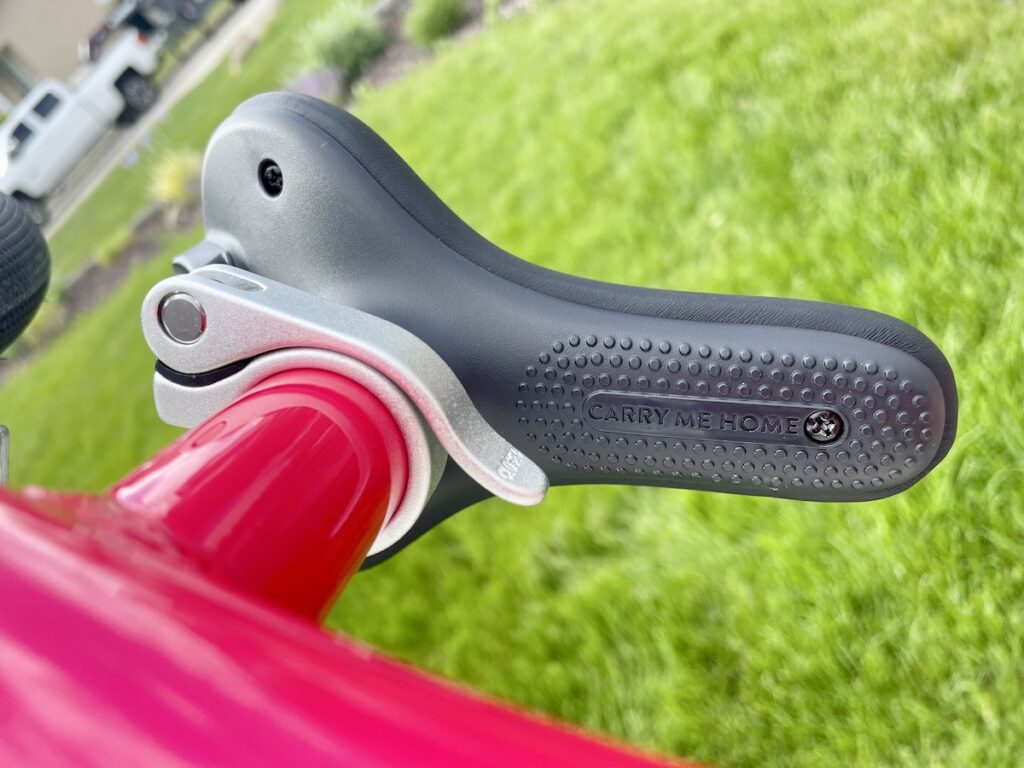
The underside of the saddle includes a textured grip pattern, making it easier for parents to carry the bike home when little legs get tired. It’s a small touch—but a very appreciated one.
A particularly unique feature on the woom GO is its oval-shaped seat post and insert, which prevent the saddle from twisting. While the seat tube on the frame is still round, the oval design of the seat post ensures the saddle stays straight—even if the seat collar becomes loose over time.
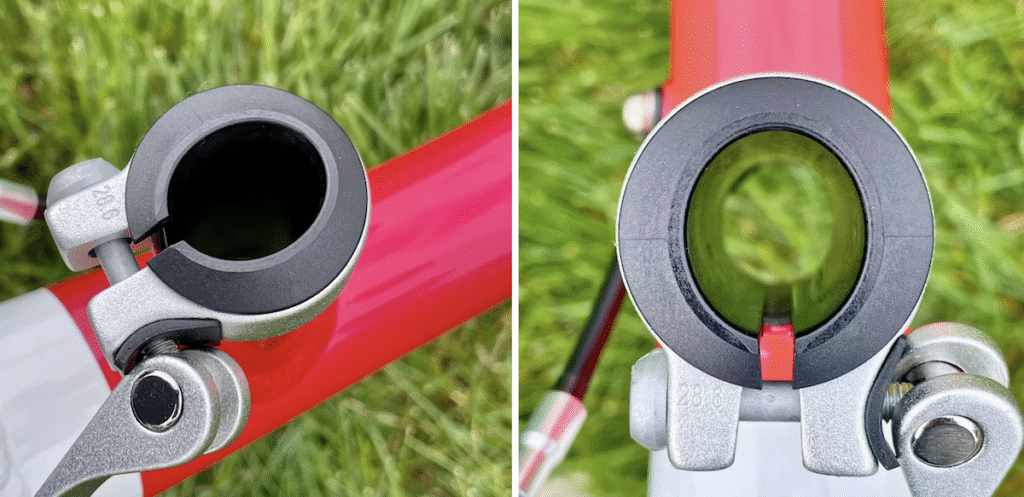
While this might seem like a minor detail, we absolutely love this update. It’s incredibly common for saddles on other balance bikes to get twisted after a spill or with regular use, especially if the seat collar slips. The woom GO 1’s smart design helps avoid that frustration and keeps the ride aligned and comfortable.
Wheels and Tires
The woom GO 1 rolls on proprietary SOOPA-DOOPA-HOOPS alloy rims—ultralight, durable, and rigid enough to stay true even after heavy use. These aluminum rims are a major upgrade over the plastic rims found on most budget bikes (like the Strider), which are more prone to warping and wear over time.
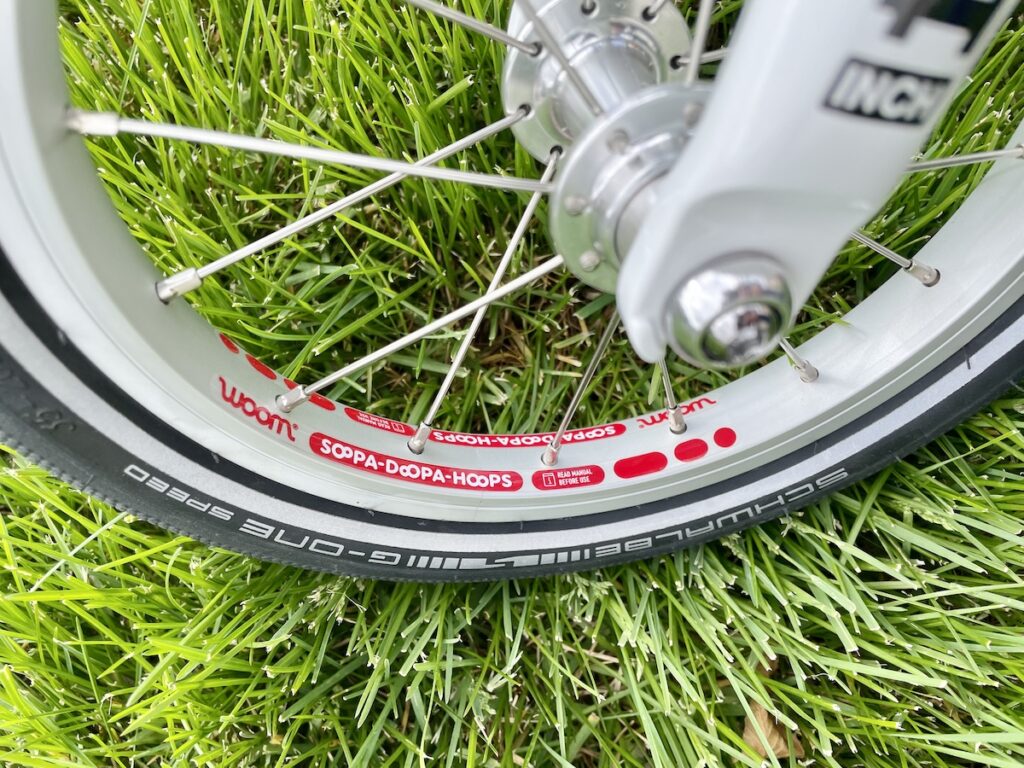
Each rim is laced with rust-free spokes and paired with a sealed bearing hub, protecting the internals from dust and debris that could slow the wheel down over time. The result? A smoother, more consistent ride—even after months of use.
The tires are just as thoughtfully chosen. The woom GO 1 comes equipped with 12″ x 1.35″ Schwalbe G-One Speed air tires, which provide impressive comfort and traction. Many balance bikes use foam tires instead, promising they’ll never go flat—which is true, but also means they provide no shock absorption and limited grip. Foam tires stay stiff over rough terrain, while air tires compress slightly to absorb impact, making a noticeable difference in comfort and control.
woom 1 Air Tire vs. Strider Foam Tire
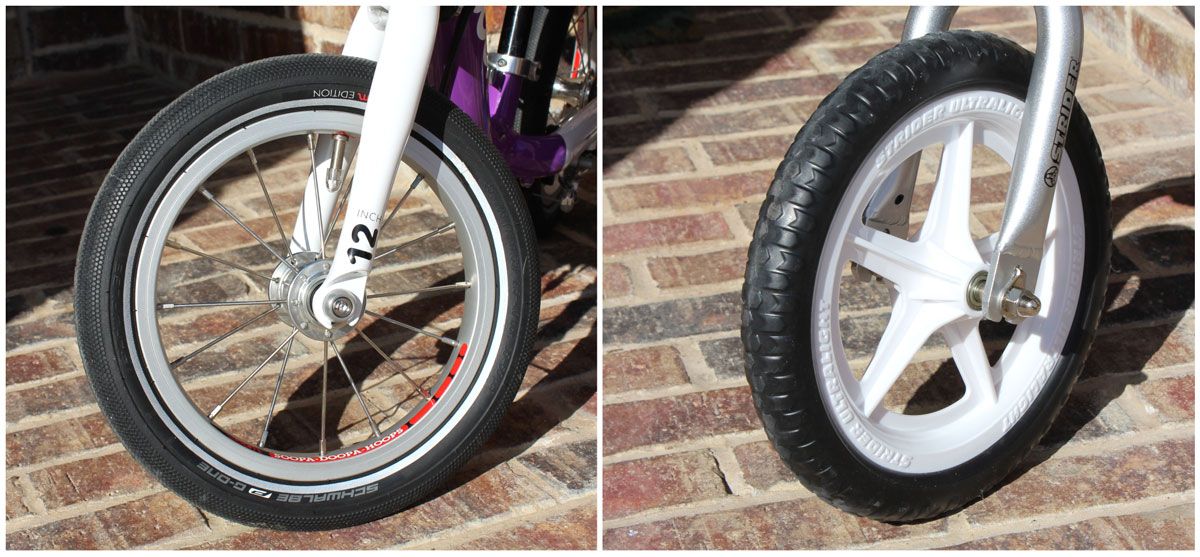
Yes, air tires are heavier and more expensive than foam, but in our experience, the added performance is well worth it. Flats can happen, and if you’re worried, we recommend adding tire sealant for peace of mind; it’s a $10 fix that takes about 15 minutes and prevents most punctures before they become a problem.
To make maintenance easier, woom includes angled valve stems—a small but smart upgrade that solves a common frustration. Because space is tight between the rim, hub, and spokes, connecting a bike pump can be tricky. The angled stems make it quick and easy to get a secure fit with the pump head.
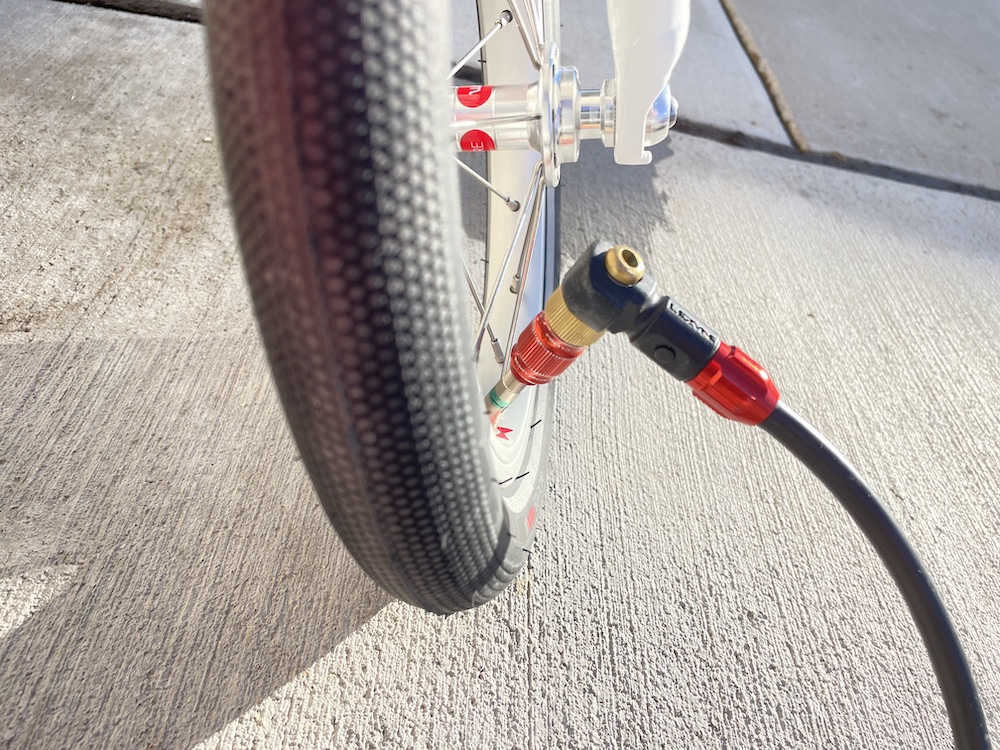
One thing to note about the tires on the woom 1, they are offer plenty of traction for paved surfaces, but are not ideal for all-terrain use. If your little one will be doing a lot of riding on non-paved surfaces, a bike with a multi-use tire will be beneficial.
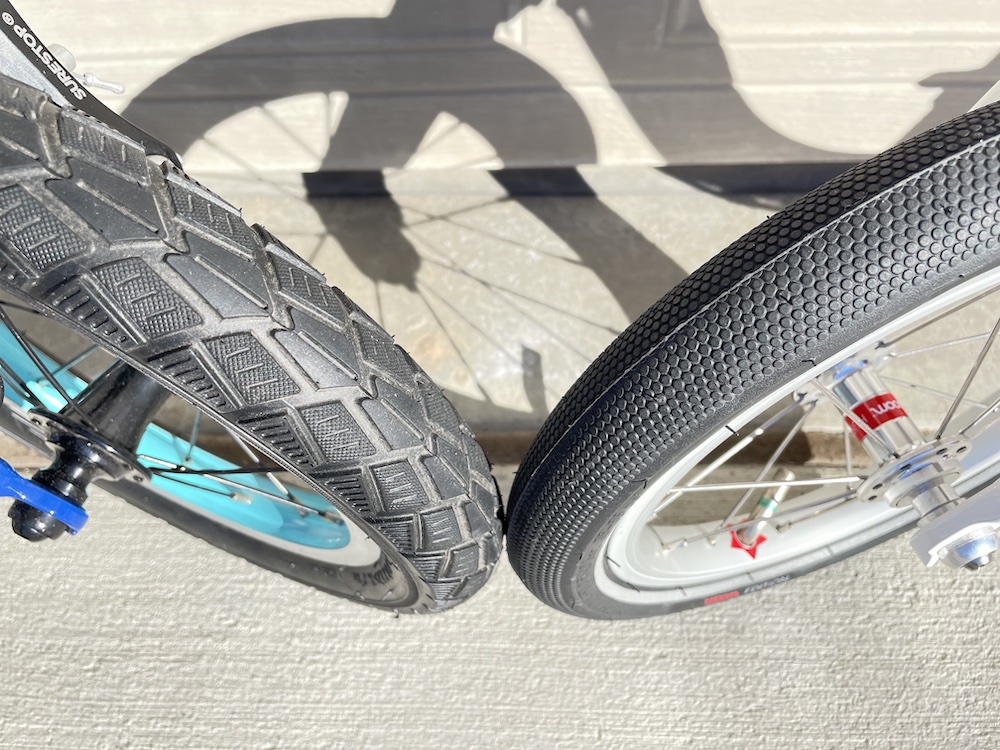
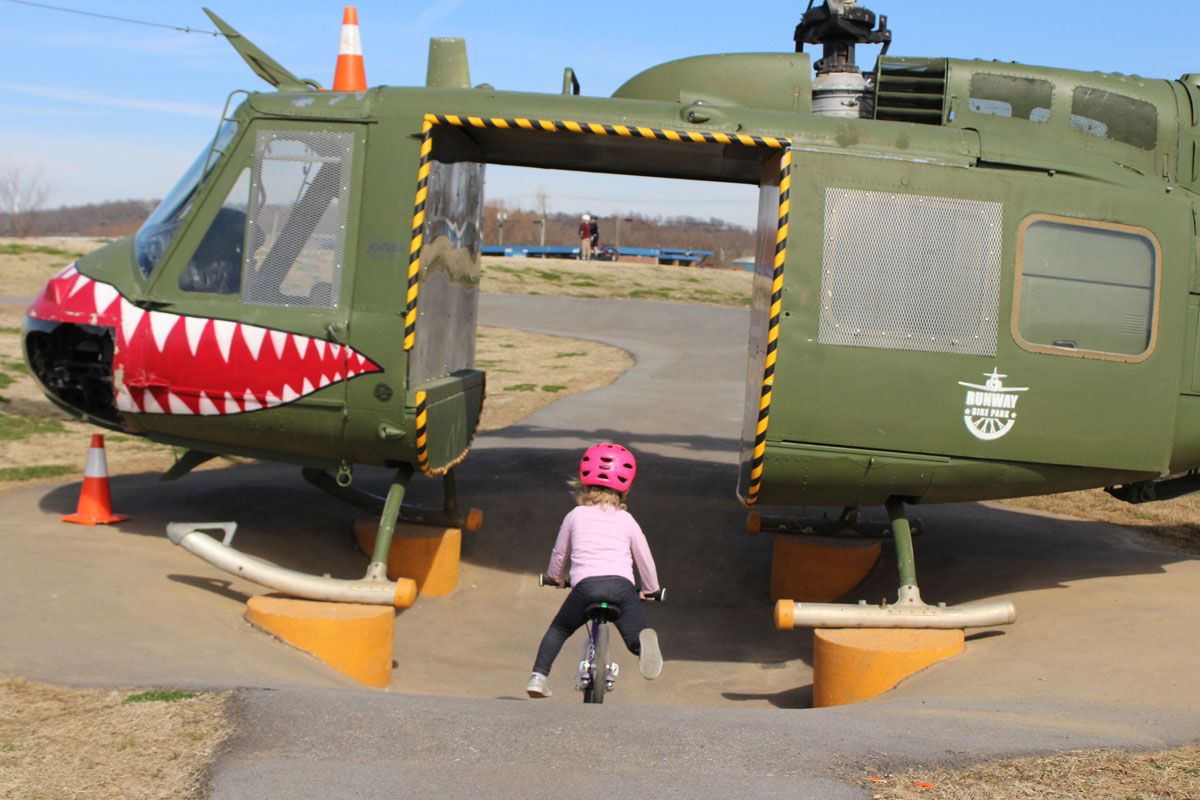
Just because the woom’s tire is designed for paved surfaces, it doesn’t mean your child can’t ride aggressively on them! In fact, the tires performed flawlessly on a solid surface pump track.
If you’re planning to take your little one onto true mountain bike trails or loose dirt, bikes like the Shotgun Dirt Hero or the Early Rider Big Foot come equipped with knobby tires—but keep in mind, both are designed for slightly older or taller riders than the woom 1.
Axle Bolts
Even the axle bolts on the woom GO 1 are thoughtfully designed with young riders in mind. Unlike standard rounded bolts that stick out past the frame—and can easily get banged up or scratch little legs—woom’s bolts are low-profile and inset into the frame.
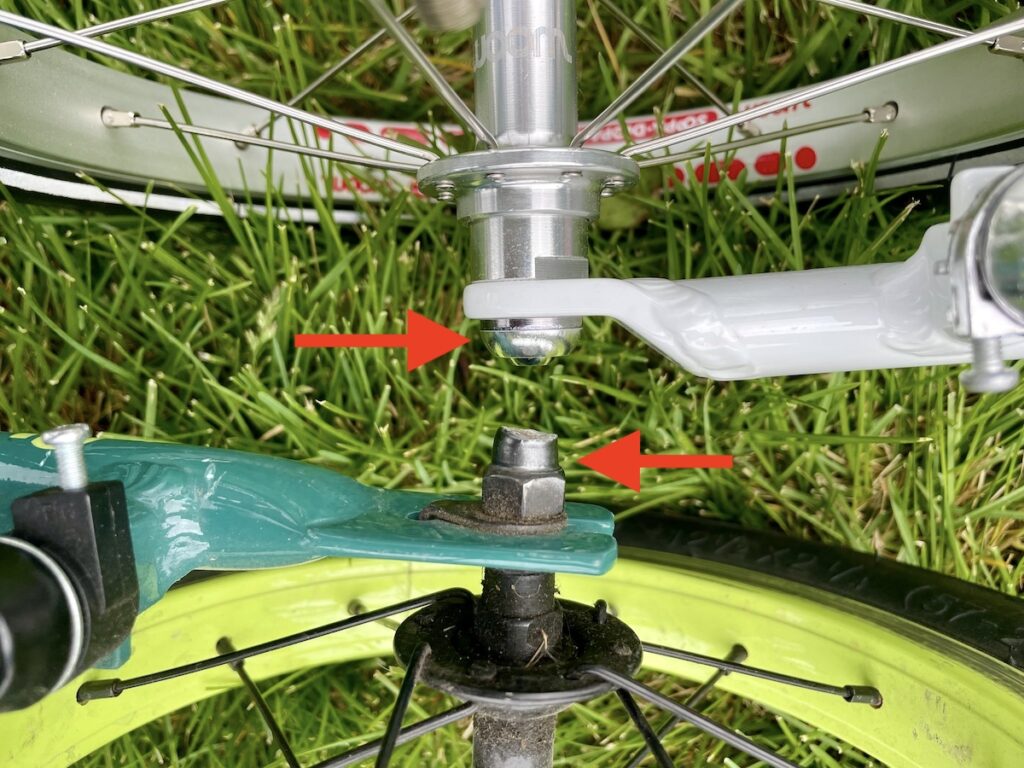
This design not only keeps the bolts protected from damage but also prevents any contact with a child’s legs while running or scooting, reducing the risk of scrapes or bruises. It’s a small detail, but one that shows just how carefully every part of the woom GO 1 has been engineered for safety and comfort.
Turning Limiter
To help prevent sharp turns and cable damage, the woom GO 1 includes a removable elastic turning limiter. While it provides gentle resistance if a child starts to oversteer, its primary purpose is to protect the brake cable.
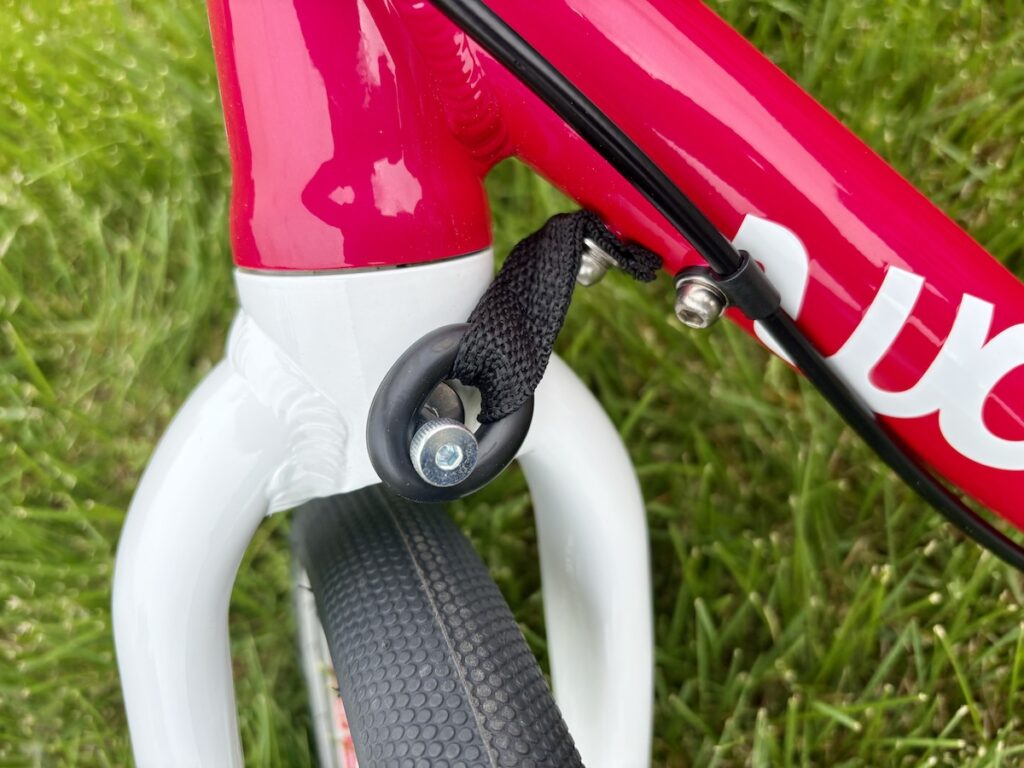
After a crash or tip-over, it’s common for young riders to accidentally twist the handlebars all the way around the frame. When that happens, the brake cable can get wrapped and stretched—eventually compromising brake performance or causing it to stop working altogether.
The turning limiter helps prevent the handlebars from rotating too far, keeping the brake cable in place and protecting it from accidental damage. It’s a simple but effective safeguard that adds to the bike’s durability—and saves parents from dealing with unnecessary maintenance.
UpCycling Program
woom USA offers an UpCycling Program, a trade-in membership that makes it easier—and more affordable—to size up as your child grows. When you trade in your outgrown woom bike, you’ll receive 40% of the original bike’s price as credit toward the purchase of your next woom bike (available for sizes 14” through 26”).
Enrollment requires a one-time $59 fee, but it can quickly pay off if you plan to stick with the woom lineup as your child progresses.woom US offers the UpCycling program, a membership program that allows you to trade in your outgrown woom bike in exchange for 40% off the original bike’s price applied towards the purchase of your next woom bike (they offer for 14″ through 26″ bikes). Enrollment in the program requires a one-time $59 fee.
woom GO 1 vs. woom GO 1 Plus
Larger than the original woom GO 1, the woom GO 1 Plus was added to the lineup to serve preschoolers and taller toddlers who are either new to balance bikes or have outgrown their woom 1 but aren’t quite ready for pedals.
With a seat height range of 15″ to 19″, the GO 1 Plus is ideal for kids wearing 3T to 5T clothing. It gives older or taller beginners the same lightweight, high-performance balance bike experience without forcing an early transition to pedals.
For reference, the 2-year-old pictured below is 37.5″ tall and fits comfortably on the GO 1 Plus.

| woom GO 1 | woom GO 1 Plus | |
| Weight | 6.3 lb. | 9.5 lb |
| Brakes | One Hand | Dual |
| Footrest | Optional | Yes |
| Seat Height | 10.75″ – 14.5″ | 14.8″ – 18.5″ |
woom GO 1 vs. Guardian Balance Bike
As shown above, the woom GO 1 is both smaller and lighter than the Guardian Balance Bike, making it a better choice for the youngest and smallest riders. Its lower seat height, shorter reach, and lighter weight give toddlers more control and confidence as they learn to ride.
The Guardian, on the other hand, is a better fit for older toddlers or preschoolers who are ready for a slightly larger bike and can manage the extra weight. It also offers more room to grow, making it a solid choice for families starting balance bike riding a bit later.
woom GO 1 Balance Bike Bottom Line
The newly updated woom GO 1 still reigns supreme as the top choice for the tiniest riders, offering unmatched fit, comfort, and performance in a lightweight, kid-focused design. For parents looking to give their child the best possible start on two wheels, the woom GO 1 is simply the gold standard.
RECALL NOTICE: If you’re considering purchasing a used woom 1 balance bike, be aware that the stems on models sold between September 2018 and March 2022 have been recalled by the CPSC. Before buying, check the woom’s Recall Notice to confirm the bike has been updated with the new stem.
FTC Disclosure: Affiliate links are included in this review. No monetary compensation was provided for this review, however, the reviewed product was supplied by the manufacturer or distributor to help facilitate this review. All opinions and images are that of Two Wheeling Tots LLC. All content and images are copyrighted and should not be used or replicated in any way. View our Terms of Use.